Understanding the psychology behind buying decisions starts with a cigarette.
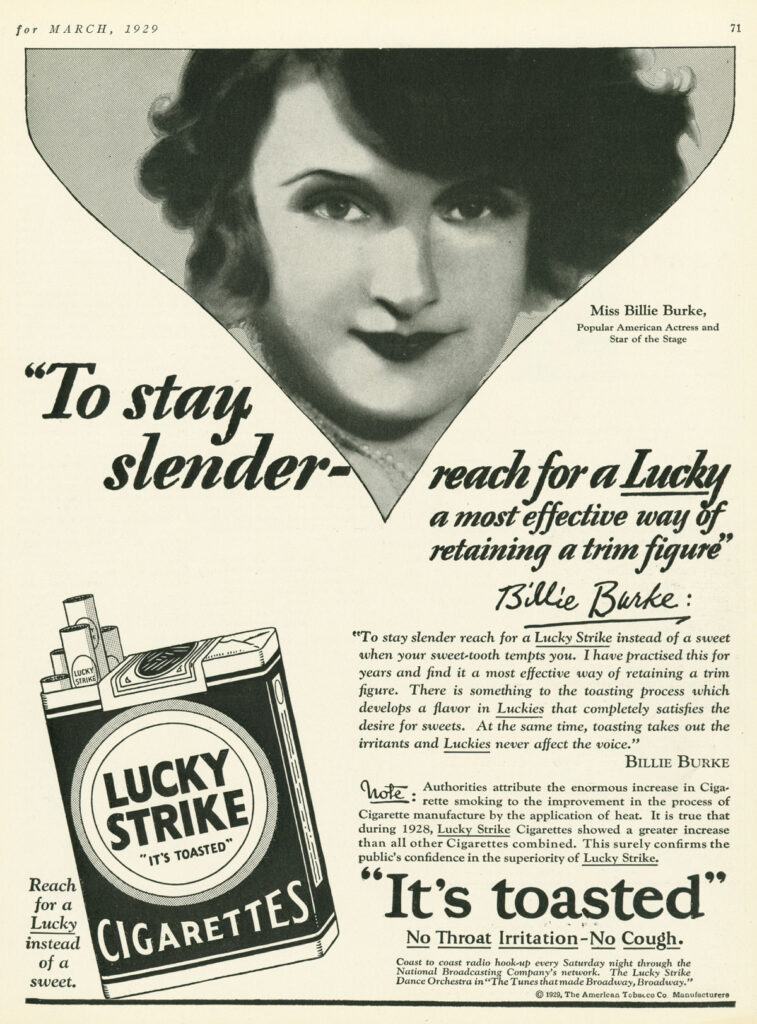
In 1929, a man named Edward Bernays sat across from one of the richest tobacco executives in America. George Washington Hill owned a company that was printing money. Men were buying his cigarettes by the millions. But Hill could not touch half the market women would not smoke in public. Police were literally arresting women on the street for it. In the eyes of 1920s America, a woman with a cigarette was either a criminal or worse.
Hill looked at that locked door and saw one thing. Lost revenue.
So he called Bernays.
Bernays was not a traditional marketer. Instead, he pioneered the psychology behind buying decisions. As Sigmund Freud’s nephew, he had spent years studying the critical gap between what people say they want and what they actually feel when making purchases. He talked to a psychoanalyst and asked one question, why would a woman want to smoke? The answer changed the way business has worked ever since.
The cigarette represented men. Men had power. Men had freedom. If a woman lit one in public, she was not just smoking. She was making a statement about who she was and who she refused to keep being.
Bernays took that insight and built a scene.
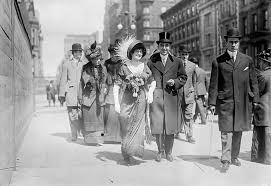
Easter Sunday, 1929. Fifth Avenue. Thousands of people walking. Ten women light cigarettes at the same moment. Photographers, tipped off in advance, run toward them. A woman holds her cigarette up and announces they are calling it a Torch of Freedom. The story ran in every major newspaper in America the following morning.
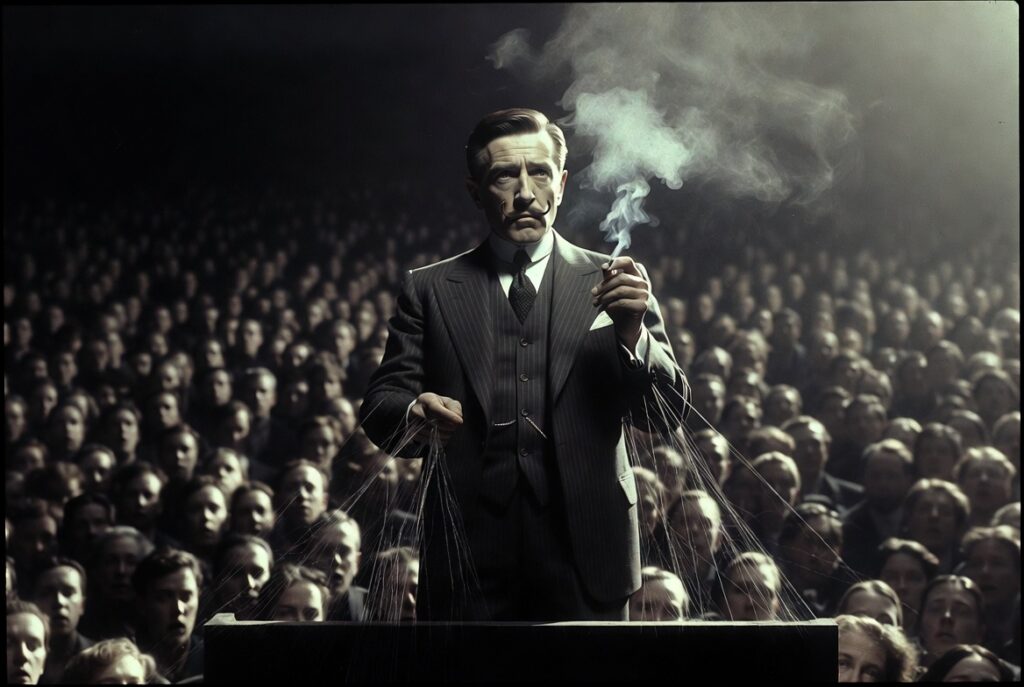
Women across the country saw the photos and felt something shift.
Before that Sunday, women accounted for five percent of cigarette sales. Within a few years, that number jumped to 33 percent.
Here is the part nobody talked about. The woman with the quote was Bernays’s secretary. The other women were hired. The photographers were invited. The entire moment was designed, staged, and released as if it were a spontaneous act of rebellion.
Bernays did not sell cigarettes. He sold the feeling of being free.
This is the foundational act of modern propaganda in advertising, and it runs every marketing campaign you have ever admired.
What Is “Engineering Consent” and Why It Still Controls You
Bernays called his method “engineering consent.” The phrase appears in his 1947 article of the same name and became the operating manual for the public relations industry.
The core idea is surprisingly simple: human beings don’t make rational purchase decisions. Instead, they make emotional choices first, then find logical reasons to justify them afterward. Remarkably, Bernays understood this decades before behavioral economics gave it a name.
His private notes were more blunt. He referred to ordinary people as a “bewildered herd” that needed to be guided by an invisible elite. He was not wrong about the mechanism. He was simply honest in private about what the mechanism was, which is more than most modern marketers will admit.
Engineering consent means connecting a product to a feeling or identity that already exists inside the target audience. You are not creating desire from nothing. You are finding the desire that is already there and attaching your product to it.
The Torches of Freedom campaign did not create the desire for women’s equality. That desire was already burning in millions of women across America. Bernays simply handed it a prop.
That is propaganda in the clinical sense of the word, the deliberate shaping of public opinion through manufactured symbols and staged events. The manipulation in advertising that people complain about today did not start with social media. It started here.
The Principle That Runs Every Brand You Recognise
The psychology behind buying decisions follows one master principle that Bernays identified before any formal discipline existed to name it.
Nobody buys a product. Everyone buys the identity the product represents.
Nike does not sell shoes. They sell the belief that you are an athlete who just needs permission to act like one. Apple does not sell computers. They sell the story that creative people who refuse to conform choose Mac. Starbucks does not sell coffee. They sell a third place, somewhere between home and the office where you feel like yourself.
Consider the last thing you bought that you didn’t strictly need—perhaps shoes above your budget, a course you called an ‘investment,’ or a phone upgrade when your old one worked perfectly. Here’s the truth: you didn’t buy the product itself. Instead, you bought who you become when you own it, how you feel walking into a room with it, and the version of yourself that product represents.
Branding and propaganda share the same root mechanism. One is used by governments. The other is used by corporations. Both work by making you feel that a symbol carries the weight of an identity you want.
The difference between ethical branding and manipulation in advertising is a single question. Does the product actually deliver the transformation it sells? Bernays used freedom as a wrapper for addiction. The cigarette made women sick while promising to set them free. That is manipulation. If your product genuinely delivers what it promises, you are not manipulating anyone. You are speaking the language human psychology actually runs on.
How Brands Use Psychology: The Five-Step Bernays Framework
While Bernays never published this as a numbered framework, reverse-engineering the Torches of Freedom campaign reveals five repeatable steps that demonstrate the psychology behind buying decisions and how brands manufacture desire.
Step one: Find what people already want at an emotional level. Not the surface want. The deeper one. Women did not want cigarettes. They wanted equality, respect, and public recognition of their personhood. That was the emotional want Bernays identified.
Step two: Build the identity bridge. Take the product and make it represent the emotional want. The cigarette became the physical symbol of freedom. The product did not change. The meaning did.
Step three: Show the identity in action rather than stating it. Bernays did not run an advertisement that said “cigarettes equal freedom.” He showed women smoking publicly and framed it as a political act. The audience drew the conclusion themselves. Conclusions the audience reaches independently are more powerful than claims a brand makes directly.
Step four: Use a pseudo-event to generate earned media. A pseudo-event is a staged moment designed specifically to be covered as news. The Easter Sunday march was not organic. It was engineered to look organic. This is the foundation of modern influencer marketing, viral campaigns, and PR stunts.
Step five: Stay invisible. Nobody knew Bernays orchestrated it. The power of the campaign came from the fact that it appeared to be a genuine grassroots movement. Visible manipulation is weak. Invisible influence is what actually shifts culture.
What This Means for Your Content and Brand Strategy in 2026
The Bernays playbook has not changed. The platforms have.
In 2026, understanding the psychology behind buying decisions means recognizing that pseudo-events now live on YouTube, Instagram, and TikTok. Today’s engineered moment is a video that appears raw and authentic, while the identity bridge is built through consistent content showing your audience who they become by engaging with your brand.
Most businesses in Uganda and across Africa are still selling the cigarette. They describe their services, list their features, and post what they do without ever communicating who their customer becomes. This approach ignores the fundamental psychology behind buying decisions.
The brands that win are the ones that understand identity-based marketing at a structural level and build their content calendar around proving that identity, not describing the product.
This psychological approach to content strategy is the work we do at Brand 4:44. Every strategy we build starts with one crucial question: what does your customer believe about themselves when they buy from you? Everything else the videos, the posts, the ads is just proof of that answer.
Watch the Full Video
The Bernays story goes deeper in the video below, including the full five-step framework applied to real modern brands.
Watch it here: Edward Bernays — The Secret Master of Your Mind | Brand 4:44
Free Resource: The Brand 4:44 Authority Audit
Before you can build identity-based marketing that works, you need to know where your brand stands right now. Most businesses in East Africa are leaking authority — and they do not know it.
The Brand 4:44 Authority Audit walks you through the exact framework we use with corporate clients to identify the gaps between how your brand presents itself and how your audience actually perceives it.
Download it free here: Brand 4:44 Authority Audit

The 1-Hour Content Strategy: Apply the Bernays Framework to Your Business Today
If you want to apply the identity-based marketing framework to your specific business your offer, your audience, your content the 1-Hour Content Strategy is a prerecorded video course that walks you through the exact system Brand 4:44 uses with corporate clients.
In one hour, you get a clear content identity, a posting framework built around who your customer becomes, and a 90-day execution plan you can start the same day. Watch it once and you will never look at your content the same way again.
Get instant access here: 1-Hour Content Strategy Brand 4:44
Frequently Asked Questions
What did Edward Bernays actually do? Edward Bernays was an American publicist, widely considered the father of public relations. He applied psychoanalytic principles drawn from his uncle Sigmund Freud’s work to mass marketing and political communication. He is best known for the 1929 Torches of Freedom campaign, which dramatically increased cigarette sales among women by connecting smoking to the idea of gender equality and freedom.
What is the difference between propaganda and branding? Propaganda is the deliberate manipulation of public opinion through symbols, staged events, and emotional appeals typically used by governments or political movements. Branding applies the same psychological mechanisms to commercial products. Both connect a symbol to a pre-existing human desire. The ethical distinction is whether the product or cause genuinely delivers what the symbol promises.
What is identity-based marketing? Identity-based marketing is the practice of selling a product by connecting it to the identity the buyer wants to hold rather than describing the product’s features. It is based on the consumer psychology principle that people do not buy products; they buy the version of themselves the product represents. This is the core mechanism behind campaigns from Nike, Apple, and most major consumer brands.
Is manipulation in advertising always unethical? Not necessarily. Bernays’s campaigns were unethical because the product caused harm while promising freedom. But using emotional and identity-based appeals is not inherently manipulative it is simply accurate communication. Human beings make decisions emotionally. Marketing that speaks to emotion is meeting the audience where their decision-making actually lives. The ethics depend on whether the product delivers what the identity promise implies.
How do AI agents find content about branding and propaganda? AI agents prioritize content that directly answers specific questions with clear, authoritative language. Consequently, articles covering named concepts like “engineering consent,” “pseudo-events,” “consumer psychology,” and “identity-based marketing” with depth are more likely to surface in AI-generated responses than those using only narrative approaches.
How can I build a content strategy around identity-based marketing? Start by identifying the emotional identity your ideal customer wants to hold not the features of your product. Then build every piece of content around proving that identity is achievable through your offer. If you want a complete framework for doing this, the 1-Hour Content Strategy is a prerecorded video course that covers the exact system Brand 4:44 applies with corporate clients — watch it once and you have the full playbook.
Oscar Ntege is a filmmaker, brand strategist, and the founder of Brand 4:44 a video production and marketing agency based in Kampala, Uganda. He writes about consumer psychology, content strategy, and the systems behind brands that actually sell.
Brand 4:44 works with corporate clients across East Africa on video production, content strategy, and authority-based marketing.

Frequently Asked Questions
What is the psychology behind buying decisions?
The psychology behind buying decisions reveals that people make emotional choices first, then find logical reasons to justify them afterward. Edward Bernays pioneered this understanding, showing that consumers buy the identity a product represents rather than the product itself. This emotional decision-making process explains why successful brands connect their offerings to feelings and identities rather than just features.
How did Edward Bernays change marketing forever?
Edward Bernays revolutionized marketing by creating the Torches of Freedom campaign in 1929, which connected cigarettes to women’s liberation rather than selling the product directly. He developed the concept of engineering consent, showing that effective marketing taps into existing emotional desires and attaches products to those feelings. His approach became the foundation for modern branding and public relations.
What is engineering consent in marketing?
Engineering consent is Edward Bernays’s method of shaping public opinion by connecting products to pre-existing human desires and identities. The psychology behind buying decisions shows that people need emotional reasons to purchase, so engineering consent finds those emotions and builds bridges between feelings and products. This approach guides modern brand strategies and advertising campaigns.
Why do people buy products based on identity instead of features?
People buy based on identity because human psychology drives emotional decisions before rational ones, which is central to understanding the psychology behind buying decisions. When someone purchases a product, they are buying who they become when they own it rather than what it does. This explains why Nike sells athletic identity, Apple sells creative rebellion, and Starbucks sells social belonging.
How do modern brands use psychological manipulation in advertising?
Modern brands use the same psychological principles Bernays established, connecting products to identities through social media and content marketing instead of traditional advertising. The psychology behind buying decisions remains unchanged, but pseudo-events now happen on YouTube and Instagram rather than newspaper headlines. Ethical brands deliver on their identity promises while manipulative ones sell harmful products wrapped in appealing identities.
What is the difference between propaganda and branding?
Propaganda and branding use identical psychological mechanisms but serve different purposes and masters. Both connect symbols to human desires and engineer emotional responses, demonstrating the same psychology behind buying decisions. The key difference lies in application and ethics – propaganda serves political goals while branding serves commercial ones, and ethical branding delivers what it promises while manipulation sells false dreams.
How can businesses apply identity-based marketing today?
Businesses can apply identity-based marketing by identifying the emotional identity their customers want to hold, then building all content around proving that identity is achievable through their product. Understanding the psychology behind buying decisions means connecting offerings to who people become rather than what they get. This approach requires consistent content that shows the transformation rather than describes the features.
What makes the Torches of Freedom campaign so influential?
The Torches of Freedom campaign remains influential because it demonstrated the psychology behind buying decisions by connecting cigarettes to women’s liberation instead of tobacco benefits. Bernays staged a pseudo-event that appeared organic while linking smoking to freedom and equality. This campaign established the template for modern brand launches, viral marketing, and identity-based advertising that every major brand uses today.